Epidermal Health and Scarring in PCFG Gray Whales
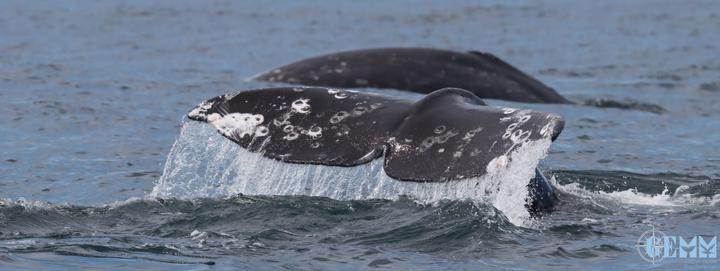
Epidermal health provides an important window into the overall well-being of baleen whales. Because the skin is the largest and most visible organ, changes in its condition can reflect how individuals are responding to nutritional stress, environmental variability, anthropogenic disturbances, and emerging disease. In recent years, field observations along the central Oregon coast have documented a growing number of Pacific Coast Feeding Group (PCFG) gray whales exhibiting an unusual skin condition characterized by white, raised patches that vary in size and coverage across weeks or even days. The biological origin of this skin condition remains unknown, raising concerns about potential infections and broader implications for immune function.
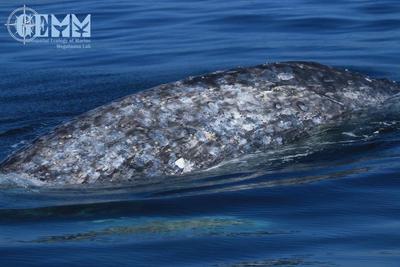
In addition to the skin condition, PCFG gray whales also accumulate a wide range of scars throughout their lives including injuries from entanglements in fishing gear, vessel strikes, and rake marks from killer whale attacks. These scars are reflective of both acute injuries and longer-term exposure to chronic stressors. Because wound acquisition and healing processes can be affected by nutritional stress or physiological conditions, scarring and skin condition together represent a powerful tool for assessing individual health. Understanding how these visible indicators vary across individuals, across time, and across environmental contexts is essential for understanding the cumulative pressures facing this population.
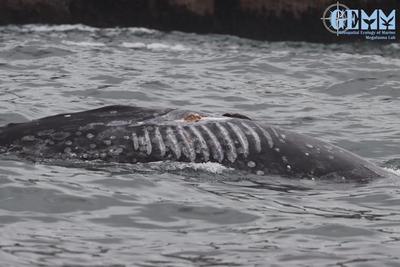
My research aims to characterize patterns of skin condition and scarring using high-resolution photographic data, and to integrate these patterns with demographic attributes, body condition metrics, space-use behavior, and environmental drivers. Several guiding questions shape the project: How common is the skin condition, and does its presence vary within or across years? Do certain individuals repeatedly exhibit higher levels of skin disease? How do scars accumulate with age, and are particular types of scars associated with specific habitats or behaviors? What are the healing timelines of known injuries? And broadly, how do environmental and behavioral factors influence the likelihood of skin disease or trauma?
To address these questions, I use a standardized photographic scoring system adapted from previous cetacean health studies and further developed by former GEMM Lab intern Serina Lane. Each image in the multi-year dataset is evaluated and categorized by whale identity, photo quality, body region, scar type, and presence of skin condition. Scars are grouped into biologically meaningful categories, such as entanglement-related, vessel-related, predation-related, or unknown origin. This structured approach enables the creation of detailed epidermal histories for individual whales, including time-series records for whales that are frequently resighted within the study area.
Using these records, I examine broad patterns in scarring and skin condition across demographic groups, body regions, and life histories. Comparisons with previously published studies from both the PCFG and other gray whale populations provide important context for interpreting whether observed patterns align with or diverge from historical trends. By integrating scarring and skin condition with additional individual-level health metrics, such as body condition and hormone data, this work seeks to better understand how external stressors are reflected in visible health indicators.
This research provides an integrated, multi-scale perspective on epidermal health in PCFG gray whales. By synthesizing photographic, behavioral, environmental, and physiological information, the project seeks to identify the ecological and biological mechanisms underlying patterns of skin condition and scarring. Ultimately, these insights will contribute to a more comprehensive understanding of cumulative stress in this coastal foraging population by using visible scarring and skin condition as biomarkers of underlying physiological stressors affecting gray whale health, thereby helping to inform conservation and management efforts in an increasingly dynamic nearshore environment.